


Rural Texas is at an inflection point.
For years, the state’s small towns have been shrinking. Drought has devastated crops. And this year a wildfire destroyed more than 1 million acres in Cattle Country.
And yet, Texans agreed to flush rural communities with billions of dollars to improve infrastructure. Oil continues to flow out of the Permian Basin at record levels alongside innovation in renewable energy.
Join us Nov. 13 and 14 in San Antonio when we'll discuss where rural Texas is and where it can go. The two-day event will feature ranchers and farmers, elected officials and civic leaders from every corner of Texas and across the country.
This two-day Texas Tribune symposium will be Wednesday, Nov. 13 and Thursday, Nov. 14 at the University of Texas at San Antonio Downtown campus (ensuring easier travel for attendees from around the state).
AGENDA: Full symposium agenda and speakers below.
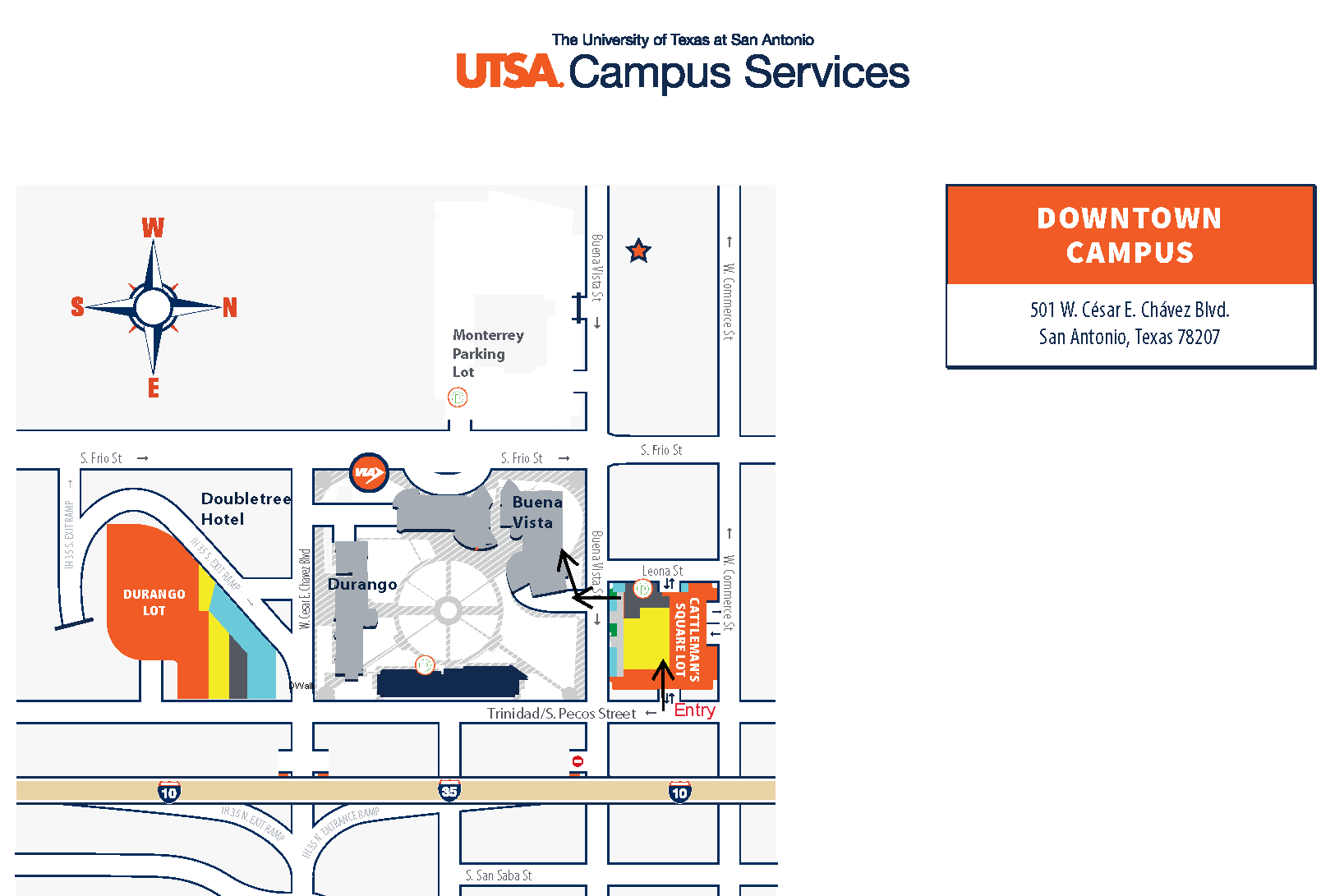
REGISTRATION: Registration and Wednesday evening's keynote will take place at the Buena Vista Theater (see map below for parking).
MEALS: Complimentary breakfast and lunch will be provided on Thursday, Nov. 14.
TRAVEL NOTE: We recommend arrival by early afternoon, Wednesday, Nov. 13 to ensure you don't miss special events (to be announced soon) and the symposium's opening keynote.
DIRECTIONS/PARKING: The Buena Vista Theater is located in the Buena Vista Building on the north side of campus. Parking is in Cattlemen's Square across the street and next door to Pico de Gallo restaurant. See map below for additional information.
HOST A WATCH PARTY: Unable to attend in person and interested in hosting a watch party in your community? Watch parties allow Texans in communities across the state to come together to watch a Tribune event and host discussions at a time and place convenient for them. Download a Watch Party Toolkit for more information.
 sday, Nov. 14 at the University of Texas at San Antonio Downtown campus (ensuring easier travel for attendees from around the state).
 A series of lightning talks and opportunities to discuss with other attendees how rural Texas towns can seek out grants and philanthropy to improve their communities
• Marco Buentello, director of grants, Humanities Texas
• Monica Cruz, State Data Center lead and special research associate, Texas Demographic Center
• Kelty Garbee, executive director, Texas Rural Funders
• Vanessa Puig-Williams, senior director, Texas Water Program of the Environmental Defense Fund
• Daniel Torres, Texas state director, US Department of Agriculture
• Amanda Weinstein, director of research, knowledge and evaluation, Center on Rural Innovation
• Amanda Wickman, program director, SW Ag Center, UT Tyler
• Moderated by Nic Garcia, regions editor for The Texas Tribune
Small businesses are the heart of rural Texas, but fraudulent litigation practices are fueling unnecessary lawsuits that make it harder and more expensive to own a business in Texas. Hear from rural lawmakers and business owners about why the litigation environment has shifted from compensating those who are truly injured to targeting Texas businesses, and what can be done to rebalance it in the 2025 legislative session.
• State Rep. Ryan Guillen, R-Rio Grande City
• State Rep. Ken King, R-Canadian
• State Rep. Angelia Orr, R-Itasca
• Moderated by Rob Hughes, executive director, Texas Forestry Association
The 2024 election cycle's fights over private school vouchers brought major shakeups among rural representation in the Texas Legislature. Now a transformed group of lawmakers will head to Austin looking to address issues ranging from education to water, broadband internet to health care accessibility. How will rural lawmakers move forward with state leaders?
• State Rep. Drew Darby, R-San Angelo
• State Rep. Mary E. González, D-Clint
• State Rep. Gary VanDeaver, R-New Boston
• Moderated by Matthew Watkins, editor-in-chief, The Texas Tribune
We invite attendees to join us for a complimentary breakfast before the program.
Partner program: Commit Partnership demonstration in the theater foyer
Join us for a hands-on demonstration of Commit Partnership's data tools to explore how well public school students are being supported in your corner of Texas.
One of Texas' most reliable and historic economic drivers has been agriculture. However, the industry has been upended by climate instability, technological changes and a shift toward urbanization. How is the state’s ag industry moving forward in the 21st Century and what does the state and federal government need to do to help?
• David Gibson, immediate past president, Texas Ag Council
• Diana Padilla, co-owner, Yahweh’s All Natural Farm and Garden in Harlingen
• Lillian Salerno, acting deputy undersecretary, US Dept. of Agriculture
• David Volleman, partner, Volleman’s Dairy Farm in Gustine
• Moderated by Berenice Garcia, Texas Tribune's regional reporter covering the Rio Grande Valley
For years, Texas' rural towns have decreased in population. However, certain towns saw a boom last year. What are the realities on the ground in these shrinking and growing rural towns?
• Tania Moody, executive director, Texas Downtown (Levelland)
• Lloyd Potter, Texas State Demographer; UTSA professor of sociology and demography
• Rick Rhodes, rural engagement coordinator, Texas Rural Funders
• Moderated by Jayme Lozano, Texas Tribune's regional reporter covering the South Plans and Panhandle
One way rural community leaders hope to sustain and grow their communities is by focusing on their youth. Will the state legislature help?
• Michael Looney, VP of economic development, San Angelo Chamber of Commerce
• Ann Vlach, executive director, Education to Employment Partners
• Jenni Winegarner, board president, Canyon ISD
• Sneha Dey, education reporter for The Texas Tribune, covering postsecondary pathways to employment
Rural Texas was walloped by fire, floods and other natural disasters this year. How are communities rebuilding and preparing for more frequent and dangerous storms?
• James Henderson, Texas Panhandle rancher
• Andy Holloway, Hemphill County Texas A&M AgriLife agent
• Sydney Murphy, Polk County Judge
• Thomas Tunstall, research director for Institute of Economic Development, University of Texas at San Antonio
• Moderated by Jayme Lozano, Texas Tribune regions reporter covering the South Plains and Panhandle
Last year, Texas voters approved three major investments in the state’s water, broadband and energy infrastructure. Is that money making its way to rural communities?
• Laura Capper, CEO, EnergyMakers Advisory Group
• Rusty Moore, general manager and Chief Operating Officer, Big Bend Telephone
• Rogelio Rodriguez, director of the Texas Infrastructure Fund at the Water Finance Exchange
• Dee Vaughan, farmer and Moore County Commissioner
• Moderated by Carlos Nogueras Ramos, regional reporter covering the Permian Basin

Email us at events@texastribune.org
The Texas Tribune is a nonprofit, nonpartisan news organization that is funded in part by donations from members, foundations and corporate sponsors. Financial supporters play no role in the Tribune's journalism. Find a complete list of them here.

Saucedo-Herrera is the president and CEO of greater:SATX, a regional economic partnership charged with growing and diversifying the eight-county San Antonio-New Braunfels MSA. During her seven-year tenure at the helm of San Antonio’s economic development team, greater:SATX has secured over 23,000 jobs for the region through recruitment and expansion projects that include work with Ernst & Young, Victory Capital, Navistar and Aisin.

Kamerlander is president and CEO of the Greater San Marcos Partnership. He formerly served as director of Lockhart Economic Development, where he developed the city’s first economic development strategic plan to promote Lockhart as a destination for job creation and investment. The successful program saw the development of a LEDC-owned 75 acre-acre industrial park housing Lockhart’s most recent announcement, The Ziegenfelder Company, a frozen treat manufacturer. The project included a $46 million investment and is creating 100 new jobs.

Latson is the CEO of Opportunity Austin. Previously, he founded and served as executive director for ARMA, the Austin Regional Manufacturers Association, a business group focused on strengthening the advanced manufacturing community through advocacy, workforce development and networking. Latson is also a member of Gov. Greg Abbott’s Semiconductor Taskforce.

Packer is president and CEO of the New Braunfels Chamber, a membership organization representing more than 1,600 businesses. The chamber advocates for sound public policy, serves as the destination marketing organization for New Braunfels and manages Confluence, a public-private economic development initiative.

Cisneros is chair of the infrastructure investment firm American Triple I. He is also vice chair of the board of directors and equity owner of Shank Williams Cisneros & Co. LLC and principal of Siebert Williams Shank & Co. LLC. He was mayor of San Antonio from 1981-89 and secretary of the U.S. Department of Housing and Urban Development under President Bill Clinton from 1993-97.


